
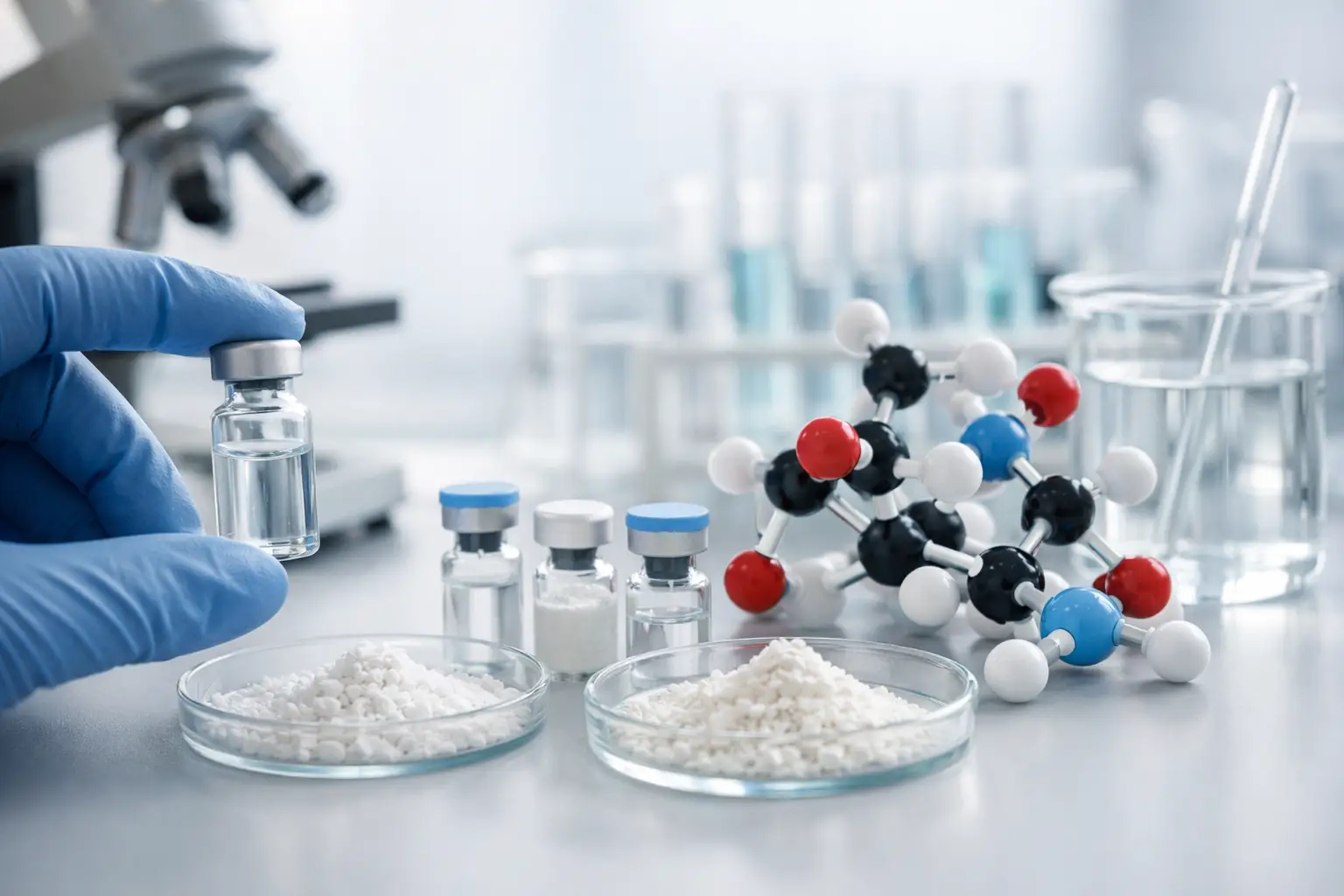
What Is Third Party Lab Testing for Peptides?
A peptide vial can look professional, carry a purity claim, and still leave the most relevant questions unanswered: Was this specific batch analyzed? Which methods were used? Does the documentation correspond to the material being received? For research buyers, what is third party lab testing is not a theoretical quality question. It is the process that helps separate documented research materials from unsupported claims.
Third-party testing places analytical verification in the hands of an independent laboratory rather than relying solely on a supplier’s internal assessment. For peptide research compounds, this commonly includes High-Performance Liquid Chromatography (HPLC) to assess purity and Mass Spectrometry (MS) to support identity confirmation. When results are tied to a specific batch and made available through a Certificate of Analysis (COA), researchers have a defined basis for evaluating the material before it enters a controlled study environment.
What Is Third Party Lab Testing?
Third-party lab testing is analysis performed by a laboratory that is independent of the company selling or manufacturing the product. The laboratory evaluates defined characteristics of a sample and reports its findings using documented analytical methods.
The distinction matters because the party generating the result is separate from the party making the commercial claim. Internal quality control can be valuable, especially when it is well documented and consistently applied. However, independent testing adds a separate verification layer and reduces reliance on a supplier’s statement alone.
For research peptides, third-party analysis is typically focused on characteristics such as identity, purity, and, where applicable, composition or quantity. The exact testing panel should match the compound and the research buyer’s intended analytical requirements. A single percentage on a product page is not equivalent to a batch-specific analytical report.
Why Independent Verification Matters for Research Peptides
Peptide compounds are sensitive to sourcing, synthesis, purification, storage, packaging, and handling. A small difference in any of these stages can affect the consistency of material supplied from one lot to the next. That is why a supplier’s quality program should be evaluated as a system, not as a single claim.
Independent laboratory testing helps establish whether the batch aligns with the stated specification at the time it was tested. It gives procurement teams and researchers a document they can review, retain, and compare against the physical product’s lot or batch identifier.
This does not mean a COA eliminates all research risk. Testing reflects the sample submitted and the methods performed. It does not replace appropriate laboratory controls, method suitability assessments, storage practices, or researcher responsibility. It does provide an accountable starting point: a documented result connected to a defined batch.
For buyers working with compounds such as Retatrutide, NAD+, BPC-157, GHK-Cu, or other research materials, that distinction is practical. If batches cannot be identified and verified, it becomes harder to maintain continuity in analytical work or explain material selection during internal review.
The Core Methods Used in Peptide Testing
HPLC for Purity Assessment
HPLC separates components within a sample. In peptide analysis, it is commonly used to determine the relative presence of the target peptide and detectable impurities under the specified test conditions. The resulting chromatogram provides more useful context than a broad marketing statement such as “high purity.”
A reported HPLC purity value should be interpreted with care. It is tied to a particular method, detection approach, and sample. It should not be treated as a universal measure of every possible impurity or a guarantee that the material is suitable for every research protocol. Still, HPLC is a foundational method for assessing peptide purity and batch consistency.
Mass Spectrometry for Identity Confirmation
Mass Spectrometry measures mass-to-charge characteristics and is widely used to support confirmation that the analyzed material is consistent with the expected molecular mass of the target compound. In practical terms, it helps answer a basic but essential question: is the sample consistent with the identity stated on the label and COA?
HPLC and Mass Spectrometry serve different purposes. HPLC is generally used to characterize separation and purity, while MS supports identity confirmation. Strong documentation often includes both because a purity result alone does not independently establish identity, and an identity result alone does not establish purity.
Additional Testing Depends on the Material
Some research materials may warrant additional analysis based on compound type, formulation, intended use, or customer requirements. This can include moisture content, residual solvent analysis, microbial testing, endotoxin testing, elemental impurity screening, or assay determination.
There is no universal panel that answers every question for every product. A responsible buyer should avoid assuming that any one test proves complete quality. The appropriate scope depends on the material and the requirements of the research setting.
How to Read a Certificate of Analysis
A COA is useful only when it can be traced to the item received and understood in context. At minimum, researchers should look for a product name, batch or lot number, test date, analytical methods, reported results, and an identifiable issuing laboratory or quality authority.
The batch number is especially important. It should correspond to the label or packaging associated with the product. A generic COA that is not tied to a batch offers limited value because it does not establish that the current material was the material analyzed.
Researchers should also distinguish between a specification and a result. A specification describes an acceptable range or criterion, such as a minimum purity threshold. The result states what the laboratory observed for that batch. Both are needed to make a meaningful comparison.
Review the document for clarity rather than presentation alone. Clean graphics, stamps, or a high-resolution PDF do not establish validity. The useful questions are straightforward: Is the batch identifiable? Are the methods named? Are results reported? Can the document be verified without relying on an untraceable image?
Batch Verification Is the Operational Standard
Testing one representative batch and applying that result indefinitely to future inventory is not the same as batch verification. New manufacturing lots can vary, even when produced to the same target specification. A quality-focused supplier treats lot-level control as a routine operational requirement.
Per-batch COAs create a usable documentation trail from product listing to packaging to analytical report. QR-based COA verification can further reduce friction by allowing buyers to retrieve the relevant documentation directly, provided the QR record resolves to the correct product and batch.
At PeptydLab, batch tracking and COA access are positioned as part of the purchasing standard because documentation should be available before researchers need to question it. Controlled packaging and secure fulfillment support that same objective by helping preserve product identification and handling continuity after release.
What Third-Party Testing Does Not Prove
Independent testing is a meaningful quality control tool, but it has boundaries. A third-party report does not authorize a compound for human use, establish clinical safety, or replace regulatory approval. Research peptides and related compounds supplied for laboratory use are not intended for human consumption, diagnosis, treatment, or administration.
It also does not mean every possible attribute has been evaluated. A COA should be read according to the methods and parameters listed. If a report shows HPLC and MS, it supports the conclusions those methods are designed to support. It should not be represented as evidence of sterility, endotoxin status, stability under every storage condition, or suitability for a specific experimental protocol unless those attributes were separately tested and documented.
This is where precise language matters. “Lab tested” is a broad phrase. “Independently analyzed by HPLC and Mass Spectrometry, with a batch-specific COA” is a more meaningful statement because it identifies the verification process behind the claim.
Questions to Ask Before Purchasing Research Materials
Before selecting a supplier, research buyers should be able to obtain clear answers to several basic questions:
- Is the available COA tied to the exact batch being sold?
- Which analytical methods were used to assess identity and purity?
- Can the COA be verified through a batch number, QR code, or documented retrieval process?
- Does the supplier distinguish research use from human or therapeutic use?
- Are product labeling, packaging, and fulfillment practices designed to preserve batch traceability?
A supplier that cannot provide direct, consistent answers may still have a product listing and a purity claim. That does not create the documentation needed for controlled research procurement.
Documentation Supports Better Research Decisions
The purpose of third-party lab testing is not to create paperwork for its own sake. It is to give researchers evidence they can evaluate before introducing a material into a study workflow. Reliable documentation supports purchasing discipline, batch continuity, internal recordkeeping, and more informed decisions when repeat ordering is required.
When a supplier can connect independent analytical results to a clearly identified batch, the buyer has something concrete to assess. That is the practical value of third-party testing: not a vague promise of quality, but a verifiable record that helps research teams proceed with greater control.