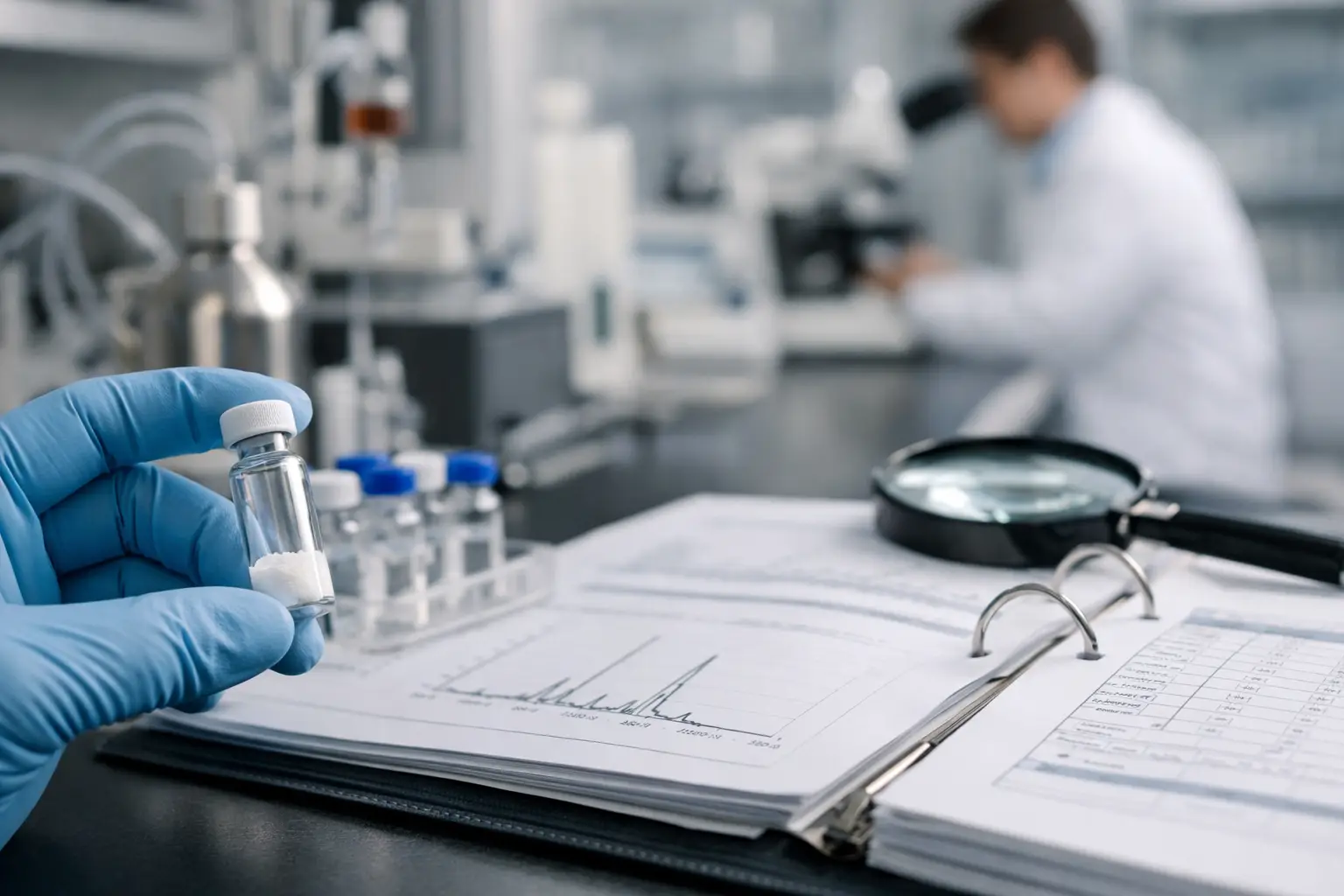
Peptide Traceability and What Batch Records Prove
Peptide traceability connects each research compound to its batch, COA, analytical data, packaging controls, and documented fulfillment history qualified labs.

Peptide traceability connects each research compound to its batch, COA, analytical data, packaging controls, and documented fulfillment history qualified labs.

Peptide stability depends on identity, formulation, storage, handling, and verification. See how controlled practices protect research material quality.
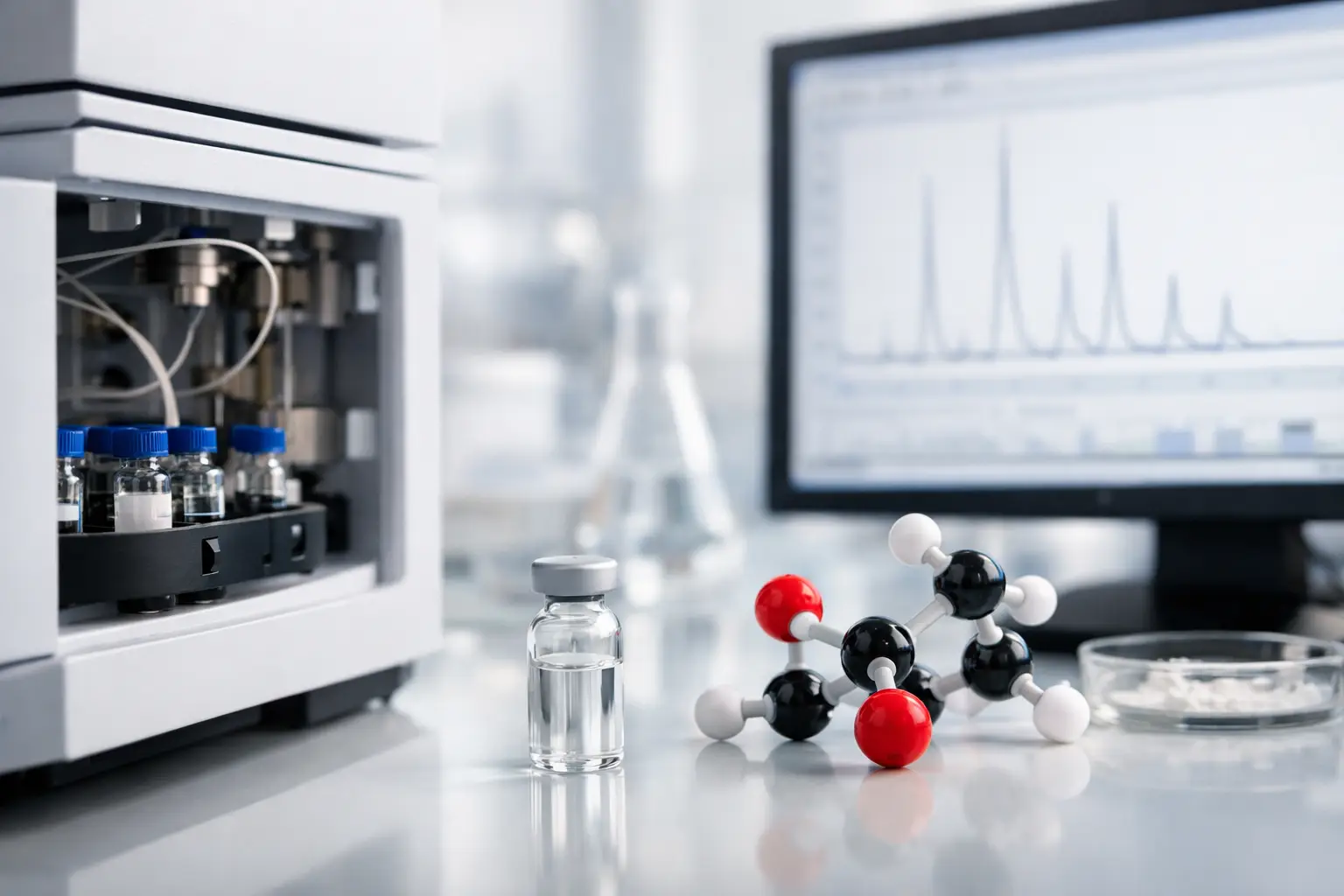
Learn how HPLC confirms peptide purity, what chromatograms reveal, and why batch-specific COAs and mass spectrometry strengthen research decisions in practice.

Learn to calculate peptide reconstitution volume with clear unit conversions, concentration formulas, and verification practices for controlled lab work.

Peptide supplier documentation should verify identity, purity, and lot traceability. Learn which records support confident, clear research purchasing.

Lab tested research compounds require more than a purity claim. Learn how COAs, batch tracking, HPLC, and MS support documented research quality standards.

Can COAs be batch specific? Learn how batch-linked testing, HPLC, mass spectrometry, and traceability support confident research material review use.

Peptide purity testing verifies identity, composition, and batch consistency with HPLC, mass spectrometry, and traceable COA documentation per batch.

Learn how to compare peptide suppliers using batch COAs, analytical methods, traceability, packaging, and fulfillment standards for research use only.

Best peptide quality indicators include batch-specific COAs, HPLC purity, mass spectrometry identity, traceability, and controlled packaging standards.