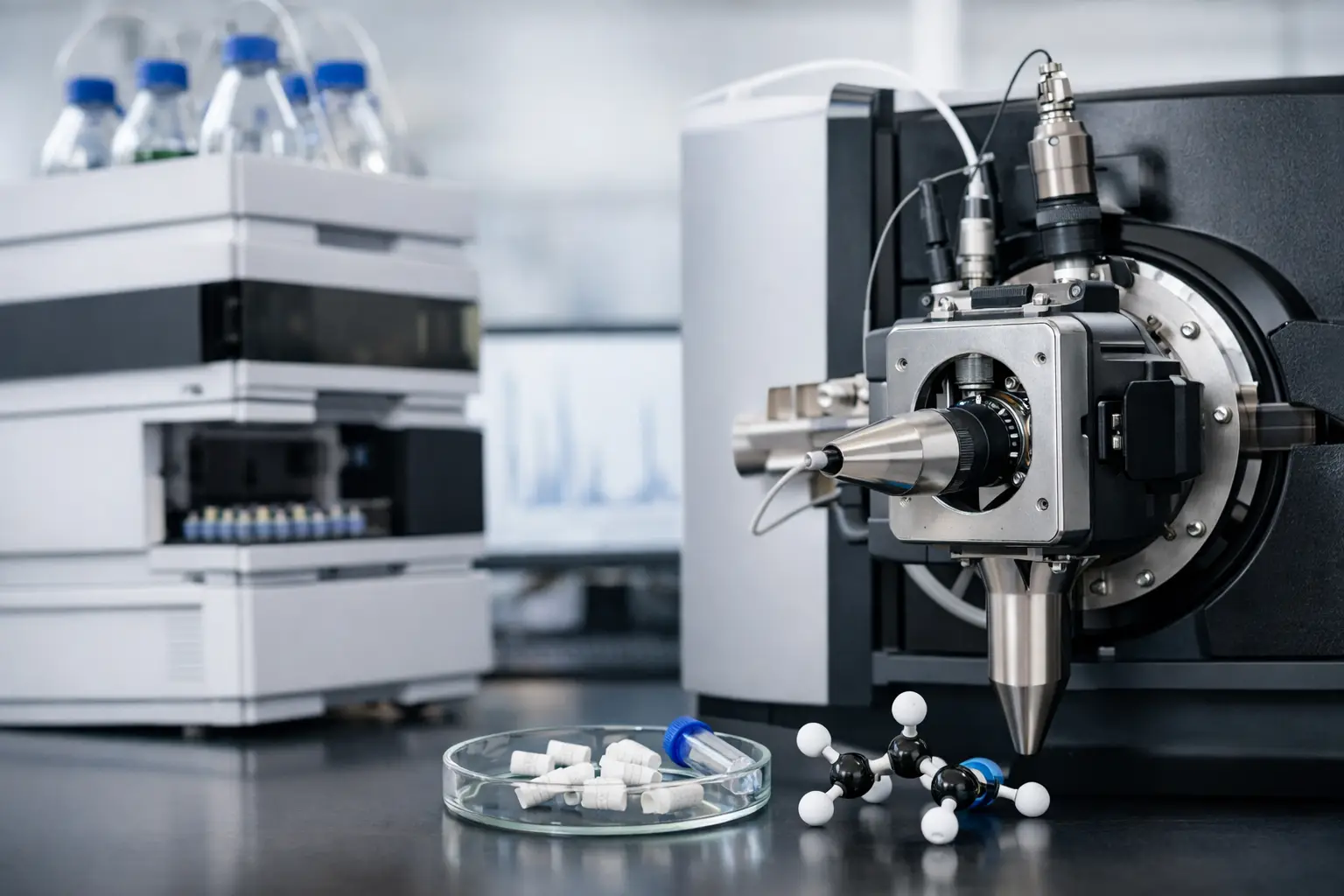
HPLC vs Mass Spectrometry for Peptide Testing
HPLC vs mass spectrometry for peptide testing: learn what each method verifies, how to read a COA, and why both methods support batch confidence decisions.

HPLC vs mass spectrometry for peptide testing: learn what each method verifies, how to read a COA, and why both methods support batch confidence decisions.
Research peptides for sale require batch-level testing, COA review, traceability, and controlled handling for qualified laboratory use within U.S. labs.

Learn how to get a Certificate of Analysis (COA), verify batch-specific results, and assess HPLC, MS, purity, identity, and documentation for research.

Learn the certificate of analysis COA meaning, how to read HPLC and MS data, and what batch-specific documentation should verify for research materials.

What does third party tested mean? Learn how independent HPLC, mass spectrometry, batch COAs, and traceability support verified research peptides in labs.
What is third party lab testing? Learn how independent HPLC and mass spectrometry testing supports peptide purity, identity, traceability, and confidence.

Third party lab testing meaning: learn how independent HPLC, mass spectrometry, batch COAs, and traceability support confident research purchasing.

Third party lab testing for peptides provides purity, identity, and batch documentation researchers need to assess materials before controlled study use.
Find the most reliable peptide source by checking batch-specific COAs, third-party testing, traceability, packaging controls, and fulfillment standards.

Learn why peptides are important to laboratory research, from molecular specificity and assay design to testing, traceability, data quality, and controls.